












Insurance Is Not Gambling: A Dangerous Comparison Explained
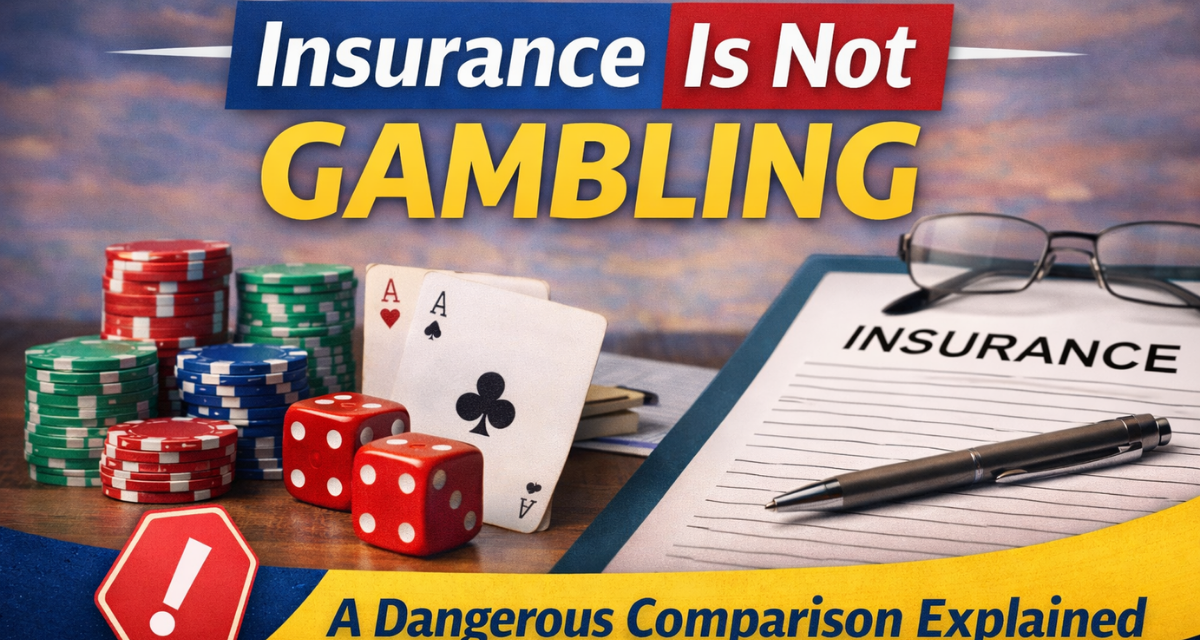
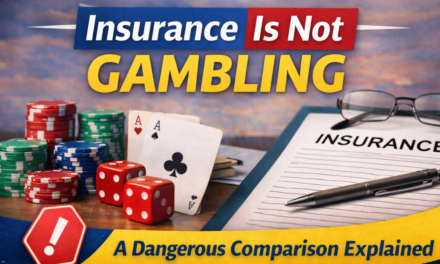
Insurance is not gambling, although people often use the word casually. At first glance, both involve money and uncertainty. However, the similarity ends there. When people treat insurance like a bet, they misunderstand its purpose and misuse it. To understand insurance properly, we must first separate it from gambling in clear, practical term.
Gambling Relies on Chance, Insurance Relies on Planning
Gambling depends on hope.
Insurance depends on preparation.
When someone gambles, they stake money on an uncertain outcome, hoping to gain more than they lose. In contrast, insurance involves careful planning to reduce financial harm when loss occurs.
Moreover, gambling seeks profit from uncertainty. Insurance seeks stability despite uncertainty. That difference matters.
Insurance Does Not Aim to Create Winners and Losers
In gambling, someone wins because someone else loses. The system depends on imbalance.
Insurance works differently. It spreads risk across many people so that no single loss becomes overwhelming. Everyone contributes small amounts so that recovery remains possible when loss strikes one person.
As a result, insurance focuses on continuity, not winning.
Gambling Is Optional Entertainment, Insurance Is Risk Management
People gamble for excitement or entertainment. They accept the possibility of total loss.
Insurance serves a different role. It manages real risks that already exist, such as accidents, illness, liability, or property damage. These risks do not disappear because we ignore them.
Therefore, insurance addresses exposure that affects daily life and long-term stability.
Insurance Uses Data, Not Luck
Gambling outcomes rely on luck. Insurance decisions rely on data.
Insurers study historical trends, loss patterns, and probability. They price premiums based on evidence, not guesses. Although uncertainty remains, it is measured and managed.
Because of this, insurance outcomes are predictable within defined limits. Gambling outcomes are not.
Why Calling Insurance Gambling Causes Problems
When people think insurance is gambling, they behave carelessly. For example, they may:
- buy the cheapest policy without understanding coverage
- ignore exclusions and conditions
- assume claims are automatic
- feel cheated when outcomes differ from expectations
As a result, frustration follows. The problem is not insurance itself. The problem is the wrong mindset.
Insurance Is About Reducing Loss, Not Chasing Gain
Gambling focuses on gain.
Insurance focuses on loss control.
Insurance does not aim to make you richer. Instead, it helps you recover and continue after loss. That role supports stability for individuals, families, and businesses.
When used correctly, insurance protects progress rather than promising reward.
Final Thoughts
Insurance is not gambling. It is a structured response to uncertainty.
Confusing the two leads to poor decisions and unrealistic expectations. However, when people understand insurance as planning rather than betting, outcomes improve significantly.
Clarity always works better than comparison.
Further Reading
This article reflects principles discussed in:
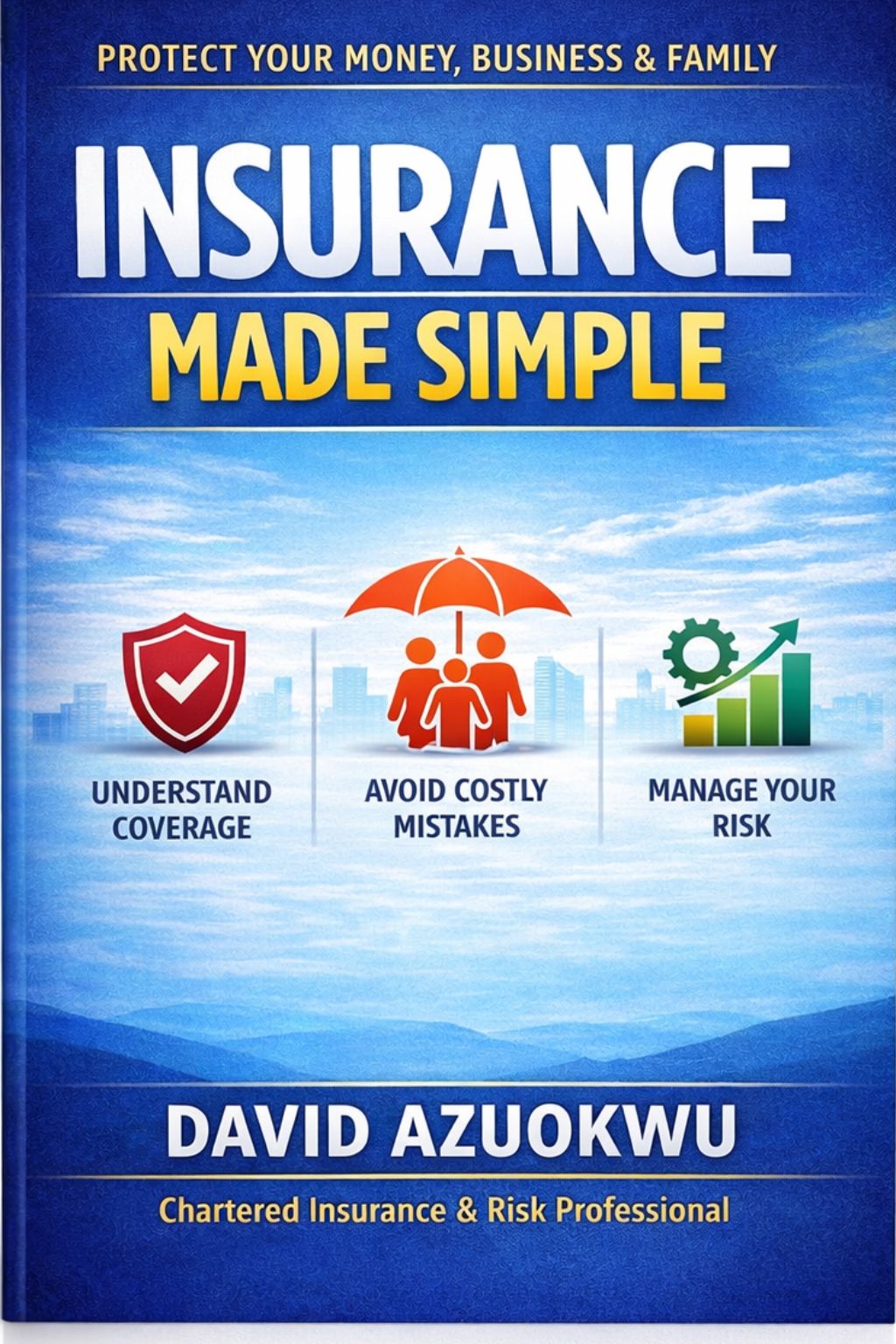
Insurance Made Simple — David Azuokwu